How to read a California mechanical plan check correction letter: a GC's guide to getting your HVAC permit approved faster
A mechanical plan check correction letter is not a rejection - it is a list of specific deficiencies that must be addressed before the permit is issued. The difference between a one-round back-check and a three-round back-check is almost entirely in how well the response addresses the correction. This guide covers the 10 most common California mechanical corrections, how to write a correction response that satisfies reviewers, and how Sacramento, LA, and Bay Area AHJs differ in what they flag.
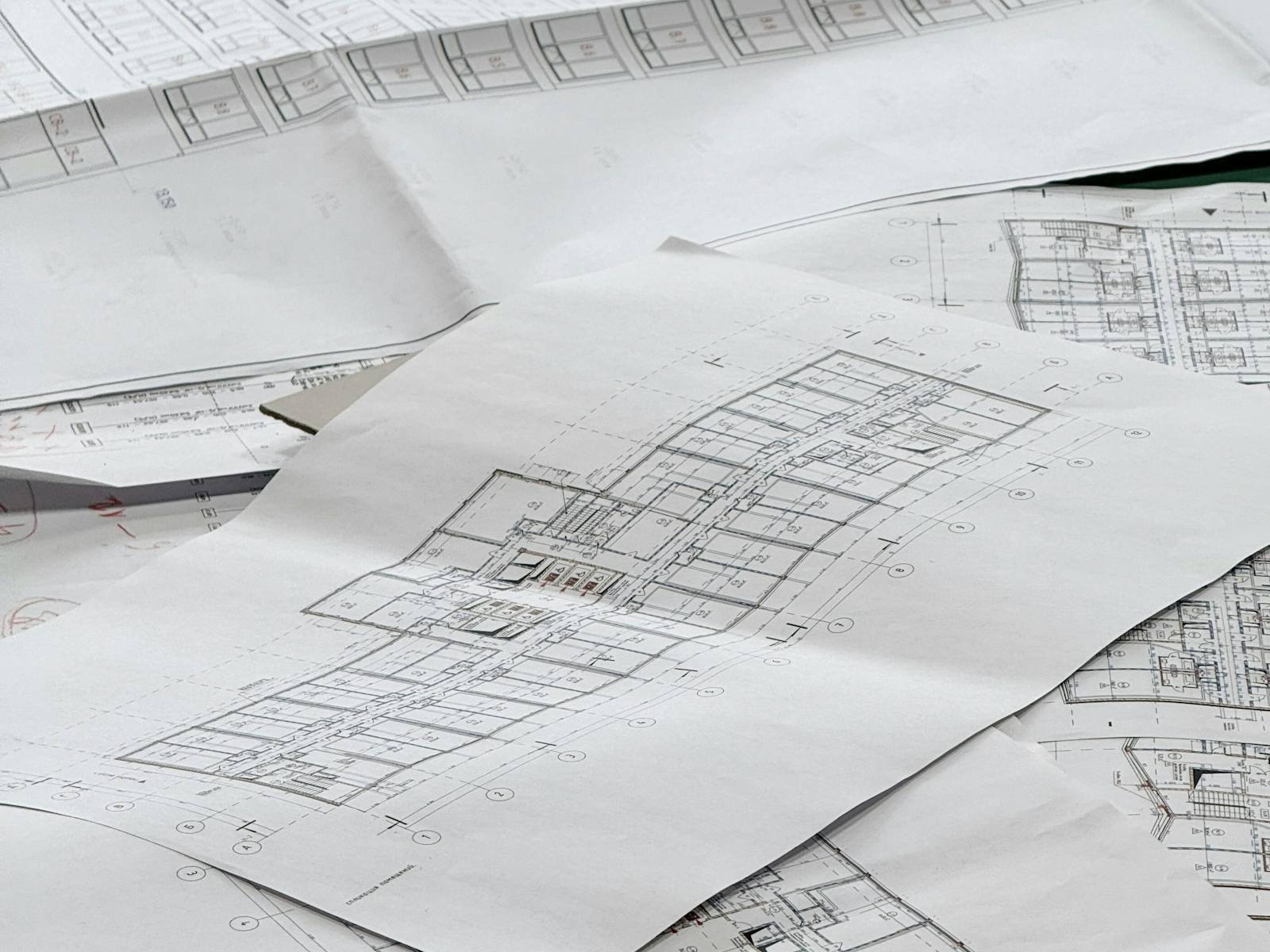
The 10 most common California mechanical plan check corrections
Based on our experience filing mechanical permits across California AHJs - Sacramento, Los Angeles, Bay Area, and Central Valley - these are the correction categories that appear most frequently and cause the most schedule delay when not addressed in the first response:
1. NRCC-MCH package incomplete or from wrong code cycle
The NRCC-MCH Title 24 Certificate of Compliance is the most-scrutinized document in a California mechanical permit set. The most common failure modes: running the compliance software on a prior code cycle (2022 instead of 2025 for permits submitted after January 1, 2026); missing sub-forms (NRCC-MCH-02 for fan systems, NRCC-MCH-03 for economizers); equipment data in the compliance software that doesn't match the equipment schedule. For complete guidance on what the NRCC-MCH package must include, see our TI HVAC scope of work guide.
2. Ventilation rate procedure not shown
CMC Table 4-4 and ASHRAE 62.1 require that outside-air CFM be calculated per zone based on occupancy type, occupant density, and floor area. Corrections: "Provide ventilation calculation per CMC Table 4-4 showing outside-air CFM for each zone." The required response: a ventilation calculation table in the drawing set or on a supplemental sheet, showing zone name, occupancy type, area, occupant density, per-person OA rate, area-based OA rate, and total OA CFM. Zone totals must reconcile with the equipment's OA capacity shown on the equipment schedule.
3. Duct material specification absent or incomplete
The drawing set must specify duct material, pressure class, and whether duct is in conditioned or unconditioned space. Corrections typically ask for: duct material (galvanized steel, aluminum, fiberglass, or flexible duct for terminal connections); pressure class (per SMACNA standards); and duct insulation R-value for unconditioned space. A duct specification note in the drawing set satisfies this correction for most AHJs.
4. Equipment schedule incomplete
Equipment schedules that list "3-ton RTU" without manufacturer model number, EER/IEER, refrigerant type, or electrical data are routinely corrected. Corrections ask for: manufacturer and model number; cooling capacity BTU/hr; EER or IEER (must meet Title 24 minimum efficiency); refrigerant type; electrical data (voltage, phase, MCA, MOCP); and physical weight for structural review. The equipment schedule must also match the NRCC-MCH compliance software inputs exactly.
5. Missing structural calculations for rooftop equipment
Any rooftop equipment over 400 lbs (and often over 200 lbs in higher seismic design categories) requires structural calculations demonstrating the roof deck and support framing can carry the equipment load. In Sacramento and most Central Valley AHJs, structural calcs can be deferred to the structural engineer of record for the overall project - but the mechanical drawings must note that structural adequacy is confirmed by the structural EOR. In LA (LADBS) and San Francisco (DBI), structural calcs or a structural engineer's letter must be included with the mechanical permit set at first submission.
6. Air quality district reference missing (SCAQMD, BAAQMD)
In Southern California, LADBS corrections frequently ask for SCAQMD Rule 445 (wood-burning appliances) or SCAQMD permit references for combustion equipment. In the Bay Area, corrections request BAAQMD combustion permit status for gas-fired units over threshold BTU. The resolution: include a note on the drawing set identifying the applicable air district, stating whether the scope triggers a district permit requirement, and (if yes) referencing the ATC application or permit number. See our Bay Area permit guide for BAAQMD specifics and our LADBS plan check guide for SCAQMD.
7. Missing acceptance test scope (NRCA-MCH)
Some California AHJs - Sacramento County, Oakland, and several South Bay cities - have adopted a requirement that the acceptance test scope be identified in the permit set, not just at startup. The correction asks: "Identify the acceptance test requirements per Title 24 Section 10-103(a). NRCA-MCH forms required." The resolution: add a note to the mechanical drawing set listing the applicable NRCA-MCH acceptance test forms by number, and identifying who is responsible for performing them (mechanical contractor, controls contractor, HERS rater).
8. Economizer not documented for units requiring it
Title 24 § 140.4(e) requires economizers on most commercial RTUs 3 tons and larger in California. Corrections ask for NRCC-MCH-03 and verification that the specified equipment includes an economizer or that a field-installed economizer kit is specified. The correction most frequently appears when the contractor specifies base-model equipment without the economizer option.
9. DCV documentation missing where triggered
Conference rooms, classrooms, restaurant dining, and fitness spaces routinely trigger DCV requirements under Title 24 Section 120.1. Corrections ask for CO₂ sensor locations on the plan and NRCC-MCH-05 documentation. The resolution: add CO₂ sensor locations to the mechanical plan with mounting height noted, and include the NRCC-MCH-05 form in the compliance package.
10. Duct leakage compliance path not stated
Ducts in unconditioned space must show how duct leakage compliance will be achieved - whether through Class 1 duct with sealing, a HERS duct leakage test scope, or the exemption for duct systems entirely in conditioned space. Corrections ask for a note or callout specifying the compliance path. For more on duct leakage testing requirements, see our companion article.
How to write a correction response letter
A well-structured correction response letter is the single most important factor in getting back-check approval on the first try. The format that works best across California AHJs:
- Header: Project address, permit number, plan check number, correction date, response date, and responsible person (the mechanical engineer or C-20 contractor submitting the response).
- Correction-by-correction response table: For each numbered correction: correction number; abbreviated correction text; specific action taken; and reference (sheet number, detail number, or document name where the resolution can be verified in the revised drawing set).
- Avoid vague responses. Responses like "noted," "will comply," or "acknowledged" do not satisfy reviewers and will generate a second-cycle correction. Every response must be specific: "NRCC-MCH-03 economizer form added to Title 24 compliance package (see Sheet M-T.3); equipment spec updated to include factory economizer option (see Equipment Schedule on Sheet M-1.1)."
- Cite code sections when disputing a correction. If you believe a correction does not apply, cite the specific code section. Example: "This correction does not apply because the duct system is entirely within conditioned space per Title 24 Part 6 § 140.4(l). See duct system location note on Sheet M-2.1."
How to prevent re-correction cycles
The goal is to receive zero corrections on the first submission, or to close all corrections with a single back-check response. The practices that reduce correction frequency most effectively:
- Use an internal checklist against the 10 correction categories above before every first submission.
- For complex projects in unfamiliar jurisdictions, request a pre-application meeting with the plan check office before submitting. Most California AHJs accommodate these for larger projects and will tell you in advance what documentation they require.
- Use engineer-stamped drawings on projects near the self-certification threshold - the investment in an engineer stamp almost always reduces correction cycles by providing an independent review before submission.
- Maintain a correction log across projects - patterns in corrections from a specific AHJ reveal what that office consistently looks for and can be addressed proactively in future submissions.
For project-specific questions about plan check strategy in Sacramento, Los Angeles, or the Bay Area, GC partners can contact our project team directly. Contact our bid desk with the project address and scope for a permit strategy discussion.
Working with Sierra Mechanical on permit submissions
Our in-house permit team prepares the NRCC-MCH compliance package, equipment schedule, ventilation calculations, and correction responses for every California commercial project we bid. Our first-round correction rate is well below industry average, and when corrections are received, we respond within 5 business days with structured correction letters. We have navigated correction cycles with Sacramento, LADBS, SF DBI, Oakland, San Jose, and dozens of other California AHJs. Bid desk: (916) 638-8605. Request a bid online.
References: California Mechanical Code (2025); California Energy Code Title 24 Part 6 (2025); LADBS Mechanical Plan Check Guide (2025); SF DBI Plan Check Procedures. Information current as of 2026-06-03.
This article is general guidance. Plan check procedures vary by AHJ. Consult your local building department and a licensed mechanical engineer for project-specific requirements.