Preventive Maintenance · Property Management · Published 2026-06-03
Commercial HVAC summer maintenance checklist: what California property managers need to do before peak heat
An unplanned commercial HVAC shutdown in July costs an average of $12,800 in repairs, emergency labor rates, and lost business. This guide covers every maintenance task California property managers, facility directors, and GCs overseeing occupied buildings should complete before Sacramento temperatures hit triple digits - and why the window to do it is closing.
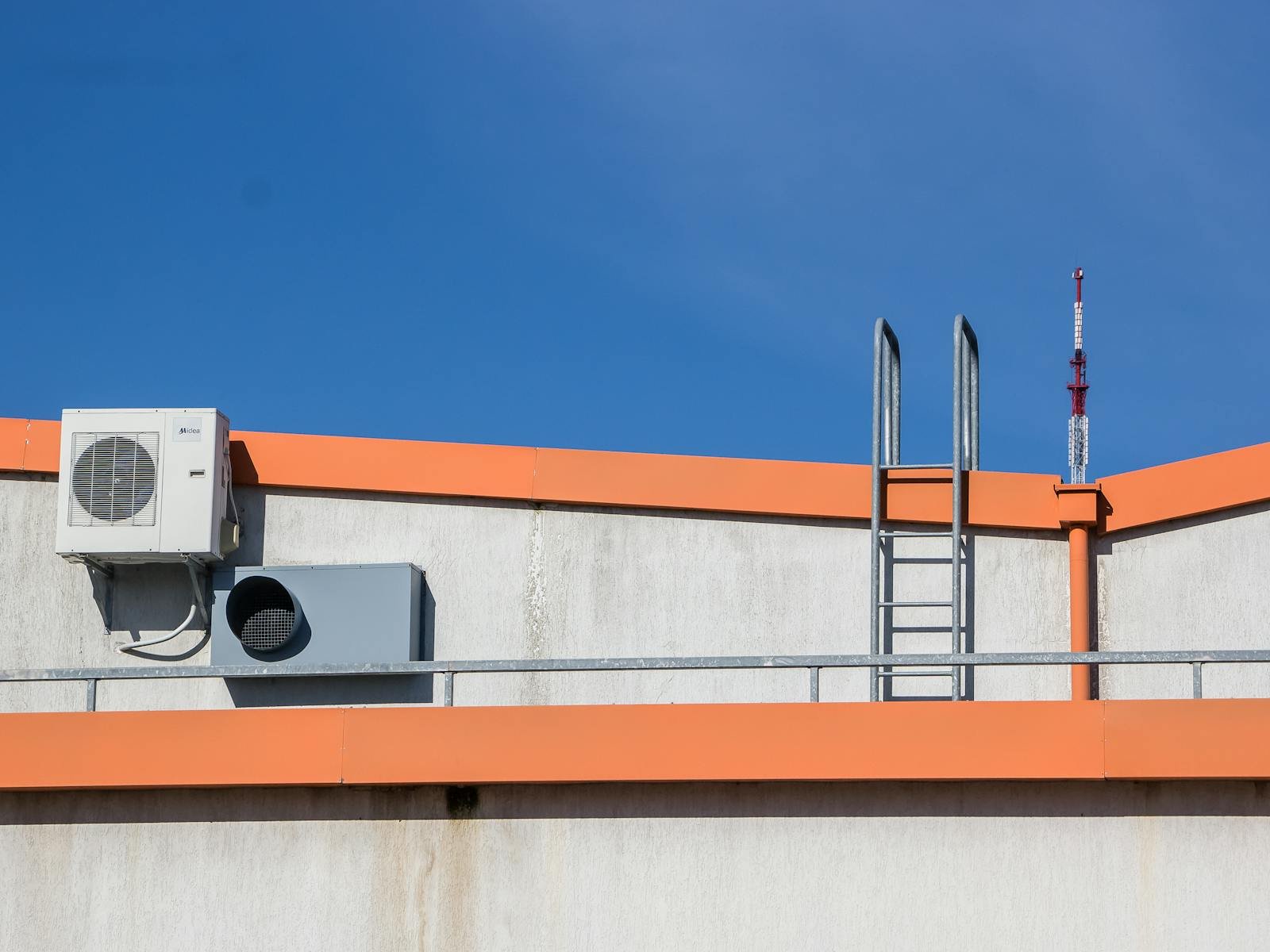
Why California is harder on commercial HVAC than most of the country
Sacramento and the Central Valley run 100°F+ days from June through September, with peak temperatures exceeding 115°F in heat events. Los Angeles and the Inland Empire see extended heat waves where overnight lows stay above 80°F - which means equipment never recovers between cycles. Add California's wildfire smoke season (June–November) loading air filters two to three times faster than normal, plus agricultural dust in the Valley, and you have a maintenance environment that makes generic national checklists dangerously incomplete.
The other factor: California's commercial building stock has a lot of aging rooftop units installed in the 2000s and early 2010s. Equipment that was marginal last summer becomes a reliability liability this summer without proactive attention.
The scheduling window: why April–May matters more than July
Most summer HVAC failures are not random events. They are the predictable result of deferred maintenance meeting peak load. The window to avoid them is April through mid-May - before mechanical contractors' schedules fill up with emergency calls, before demand pushes up lead times on replacement parts, and before ambient temperatures are already high enough to stress equipment during the maintenance visit itself.
By July, qualified commercial HVAC technicians in Sacramento and the Bay Area are booking 5–10 business days out on emergency calls. If your unit fails on a Tuesday in August, your tenants are waiting. If you ran your PM in April, your probability of a July failure drops substantially.
The complete summer maintenance checklist
1. Condenser coil cleaning
This is the highest-leverage item on the list. Condenser coils collect cottonwood seeds, dust, and debris throughout spring. A fouled coil reduces heat-transfer efficiency by up to 30% - meaning your compressor runs longer, at higher head pressure, consuming more energy and wearing faster, to achieve the same cooling output.
In California, coil cleaning is not a once-per-year task for high-use buildings. For properties near agricultural land or construction activity, inspect coil condition every 60–90 days June through September. The cleaning itself requires a low-pressure wash and a non-acidic coil cleaner - high-pressure washing bends coil fins and reduces airflow area, trading a dirty coil problem for a damaged coil problem.
2. Refrigerant charge verification
Refrigerant leaks are insidious: a 10% undercharge causes a 10–20% increase in energy consumption and a proportional increase in compressor stress. Equipment running undercharged in summer heat will often trip on high-pressure cutout, which shows up as intermittent cooling loss - the kind of symptom that gets misdiagnosed as a controls issue before someone checks the charge.
Note the R-22 phase-out implication for older California building stock: if your rooftop units are pre-2010 and still running R-22, this is the year to have a retirement-and-replacement conversation. R-22 refrigerant is no longer manufactured; stockpile supplies are finite and expensive. A system that leaks R-22 will eventually become uneconomical to maintain.
3. Capacitor and electrical component inspection
Start, run, and dual capacitors fail from thermal cycling - the same heat stress that makes California summers brutal on equipment. A capacitor that tests at 90% capacity in April may test at 75% in September and fail at 65% during a heat event. Proactive capacitor replacement based on age and condition is the single most cost-effective way to eliminate the most common summer failure mode.
Include contactor inspection: pitted or burned contacts cause voltage drop at the compressor, which causes current draw spikes, which causes overload trips and compressor winding damage. Contactors are a $15–$40 part. A failed compressor is $1,500–$6,000.
4. Filter inspection and replacement schedule
Standard filter change intervals (30–90 days) were written for average conditions. California summers are not average. Wildfire smoke events, agricultural operations, and construction activity near your building will load a MERV 8 filter in two to three weeks instead of two to three months. A clogged filter reduces airflow, drops evaporator coil temperature below 32°F, forms ice, and - when the ice melts - floods the drain pan. The resulting service call looks like a refrigerant or compressor issue until you pull the filter and find it black.
Action item: Set a calendar reminder to visually inspect filters every 30 days June through October regardless of your standard interval. Replace when pressure drop increases noticeably or when the media is visibly loaded.
5. Evaporator coil and drain pan inspection
Evaporator coils accumulate biological growth (mold, bacteria) in humid condensate conditions. In summer, drain pans can overflow if the condensate line is clogged with algae or debris, resulting in ceiling water damage and mold remediation costs that dwarf the cost of a $50 biocide treatment.
Flush condensate lines with a dilute bleach solution or commercial condensate treatment. Inspect drain pan for standing water, which indicates a clogged drain or an improper slope. Verify the primary and secondary drain connections are clear.
6. Belt, blower, and motor inspection
On older rooftop units with belt-driven blowers, inspect belt tension and condition. A cracked or worn belt that slips reduces airflow, forces the motor to run at elevated amperage, and usually fails at the worst possible time. Belt replacement is a $30 part and 20 minutes of labor. An overheated blower motor that burns a winding is a $300–$800 repair plus a full day's downtime.
Measure blower motor amp draw against nameplate FLA (full load amps). Motors drawing more than 10% over nameplate are running in a degraded condition - find out why before July.
7. Controls and thermostat calibration
Programmable thermostats and building automation systems should be verified for correct setpoints, occupied/unoccupied schedules, and setback temperatures. A thermostat that never shifts to setback mode runs the system unnecessarily during nights and weekends - meaningful energy cost over a Sacramento summer. A thermostat stuck in setback mode when the building is occupied generates tenant complaints and productivity loss.
For buildings on BACnet or Modbus BAS, this is a good time to review fault codes logged over the past 12 months. Repeated high-pressure trips, low-suction-pressure faults, or compressor short-cycling are diagnostic signals that get easier to act on before summer than during it.
8. Economizer operation (California-specific)
Title 24 requires economizer capability on most California commercial HVAC systems above 54,000 BTU/h (4.5 tons). A failed economizer damper that is stuck open runs outside air conditioning load all summer. A damper stuck closed loses the free cooling credit that California's energy code was written to capture.
Verify economizer damper opens to full free-cooling position when outside air enthalpy is favorable, modulates correctly during mixed mode, and closes at high outside air temperatures. Economizer failures are a significant source of wasted energy cost in California commercial buildings - and a Title 24 compliance issue if the building is being commissioned or re-occupied.
9. Rooftop curb and weatherization inspection
Check rooftop equipment curb seals, flashing, and pitch pocket seals annually. California's summer doesn't produce much rain, but failing curb seals allow conditioned air to bleed out and unconditioned air to infiltrate, degrading system efficiency. More importantly, a failing seal that goes unaddressed will cause a roof leak at the first significant fall rain event - typically after the summer maintenance cycle has passed and nobody has been on the roof since May.
Documentation: what property managers need to keep
Increasingly, California commercial leases and insurance policies require documented preventive maintenance records for HVAC equipment. Some property insurance carriers are beginning to condition claims coverage on demonstrable PM history. At minimum, maintain:
- Date and scope of each maintenance visit
- Technician name and company
- Refrigerant type and quantity added (if any) - required by EPA Section 608 for systems over 50 lbs
- Filter change dates and MERV rating installed
- Any deficiencies noted and their disposition
For multi-tenant buildings, this documentation protects the property manager in disputes with tenants over HVAC comfort complaints. A documented PM trail showing the system was serviced and functional two months prior is materially different from no records at all.
When to schedule versus when to replace
A system in its 8th year or older that requires a major repair (compressor, heat exchanger, reversing valve) in summer is a candidate for replacement analysis, not repair. The relevant comparison is not repair cost versus zero - it is repair cost plus continued maintenance cost plus expected remaining service life, versus replacement cost plus warranty period. For California commercial applications, a 10-year-old rooftop unit that needs a $3,000 compressor replacement may cost less to replace entirely if the rest of the unit is showing age.
Sierra Mechanical's service team can perform this analysis as part of a maintenance visit. We will give you a straight answer on repair versus replace without trying to sell you a unit you do not need.
Working with Sierra Mechanical
We provide commercial HVAC service agreements - Quarterly, Monthly, and Managed (with 24/7 emergency dispatch) - covering Sacramento, the Bay Area, Los Angeles, and San Diego. Our service technicians are EPA 608 certified, experienced on all major rooftop unit brands (Carrier, Trane, Lennox, Daikin, York, Rheem), and equipped to handle everything from filter changes to compressor replacements on-site.
Restaurant and QSR operators have additional summer failure modes specific to kitchen environments - grease-fouled coils, ventilation imbalance, and exhaust fan degradation compound the standard maintenance items above. See our guide on why restaurant HVAC systems fail in California summers for the kitchen-specific analysis.
If you manage a commercial portfolio and want to get summer maintenance scheduled before July, call our service desk at (916) 638-8605 or request a service quote online. We can typically schedule service visits within 5 business days for non-emergency PM work. GCs evaluating mechanical subs for occupied building scope should also review our guide to choosing a mechanical subcontractor in California.
Cost figures sourced from industry maintenance studies and Sacramento-area service data current as of June 2026. Efficiency degradation data from equipment manufacturer technical bulletins and peer-reviewed HVAC industry studies.
This article is general guidance and does not constitute engineering advice for a specific installation. Consult a licensed mechanical contractor for evaluation of your specific equipment and conditions.