Energy Code · Sheet Metal · Published 2026-06-03
HVAC duct leakage testing under California Title 24: what commercial contractors and GCs need to know
A failed duct leakage test on a California commercial project means remediation, re-testing, and a delayed Certificate of Occupancy. The test is not difficult to pass - if the ductwork was fabricated and installed to SMACNA Seal Class A. Here's the Title 24 trigger thresholds, the test workflow, the CF-2R-MCH sign-off sequence, and what happens when you fail.
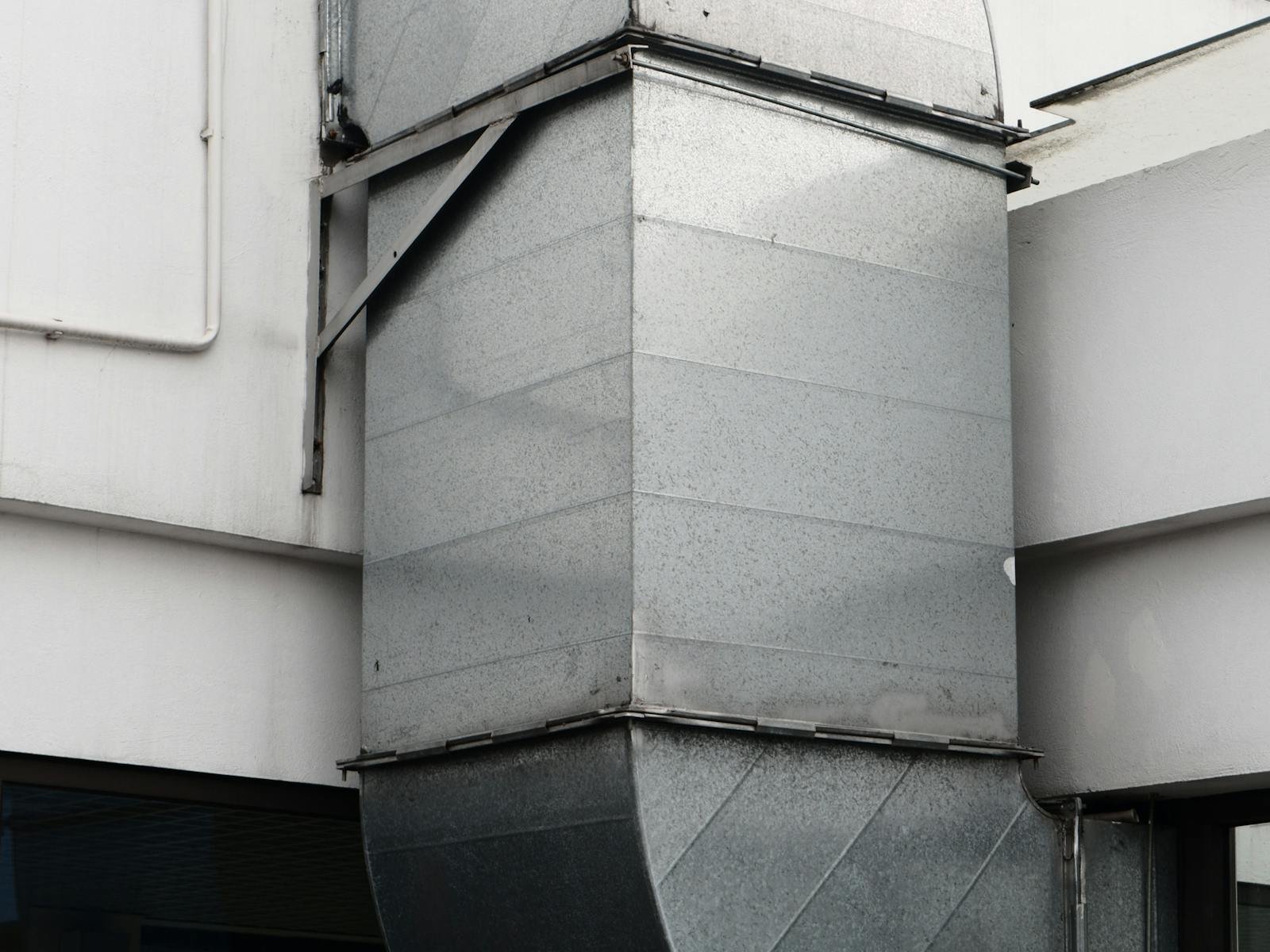
When Title 24 requires duct leakage testing
California Title 24 Part 6 requires duct leakage acceptance testing (AT-2) for commercial HVAC projects whenever new duct systems are installed or existing systems are altered. The relevant standard is the California Energy Code Acceptance Tests for Nonresidential Buildings - AT-2 specifically covers supply air distribution systems.
Practical trigger: any permitted commercial HVAC project that includes new ductwork or modification to existing ductwork triggers AT-2. This includes tenant improvements, rooftop unit replacements where duct connections are disturbed, new construction, and additions. The test is waived only for ductwork entirely within a conditioned space and enclosed in a building thermal envelope - a rare condition in California commercial construction where most duct runs through unconditioned attics, ceiling plenums, or mechanical rooms.
The required maximum leakage rate is typically 6% of design supply airflow for supply duct systems tested at 1.0 inch water gauge static pressure. Some systems and occupancies have tighter requirements. The NRCC-MCH for the project specifies the applicable leakage limit.
SMACNA seal classes: what they mean for California compliance
SMACNA (Sheet Metal and Air Conditioning Contractors' National Association) defines duct sealing requirements by static pressure class and seal class. California Title 24 compliance requires Seal Class A as the practical standard for most commercial duct systems:
| Seal Class | What is sealed | Title 24 AT-2 result |
|---|---|---|
| Class A | All longitudinal seams, transverse joints, and connections | Typically passes |
| Class B | Transverse joints only | Often fails - depends on system |
| Class C | No sealing required | Fails on most commercial systems |
| Class D | External sealant on all surfaces | Always passes - used for remediation |
A contractor who builds to Seal Class A using listed duct mastic and UL 181B-listed tape on all joints will typically pass AT-2 on the first attempt. The financial equation is straightforward: Class A sealing during installation adds 10–15% to duct installation labor. A failed AT-2 test requires remediation (mastic application to all accessible joints, re-test, ATT return visit) that typically costs 20–40% of the original duct installation labor - plus CO delay costs.
Sierra Mechanical's C-43 fabrication shop builds all commercial ductwork to SMACNA Seal Class A as standard practice. For GCs evaluating mechanical subcontractors, see our guide on how to choose a commercial mechanical subcontractor in California - and ask specifically about the sub's fabrication seal class standard before awarding.
Test-before-TAB: why the sequence matters
The single most impactful scheduling decision on a California commercial HVAC project is sequencing duct leakage testing (AT-2) before Test and Balance (TAB). Here's why:
AT-2 requires all supply and return outlets to be capped or connected, all duct sections accessible, and the system pressurized to test static pressure. TAB requires the same system condition: outlets connected, dampers set, everything operational. If you run AT-2 before TAB, one system setup serves both - the ATT pressurizes the system, documents leakage, and the TAB contractor then sets the air distribution in the same configuration.
If you run TAB first, then discover an AT-2 failure: the TAB contractor has set all dampers to their final positions. Remediation sealing changes the duct system (adds mastic, seals connections that were previously open). The changed duct system has different leakage characteristics and may have altered pressure distribution - meaning the TAB damper settings no longer produce the design airflows. The TAB scope must be re-run after the AT-2 retest passes. Cost: one additional TAB visit plus one additional ATT visit plus CO delay.
The AT-2 test procedure
The Acceptance Test Technician performs AT-2 as follows:
- Cap all supply outlets. Each supply register, diffuser, and grille is capped or blocked. Return air outlets are left open (the return side is tested separately if required).
- Pressurize the supply duct system to the test static pressure (1.0 in. w.g. for most systems) using a calibrated duct blower or the AHU fan with the AHU inlet blocked.
- Measure the leakage airflow - the CFM required to maintain test pressure. This is the leakage rate.
- Calculate leakage as a percent of design supply airflow. Must be at or below the limit specified in the NRCC-MCH (typically 6%).
- Document on CF-2R-MCH - test date, equipment used, measured leakage CFM, leakage percent, pass/fail result, and ATT signature.
A typical AT-2 test on a 10,000 CFM commercial duct system takes 2–4 hours including setup. Cost: $400–$800 for the first visit. Retest: $300–$600.
What happens when you fail - and how to fix it
A failed AT-2 is not a project catastrophe - it is a problem with a defined solution. The systematic remediation approach:
- Locate the major leak sources first. Re-pressurize the system at a lower static pressure and use a smoke pencil or your hand to feel air movement at joints, seams, and connections. The largest leaks are usually at flexible duct connections, at equipment connections (coil section to supply plenum, for example), and at field-installed fittings.
- Apply mastic to all accessible joints and seams systematically - not just the identified leaks. Targeted sealing of three large leaks often reveals that the remaining distributed leakage across many small joints still fails the test.
- Seal behind covers and access panels. Duct sections above removable ceiling tiles are accessible; duct sections above drywall ceilings are not. If major leakage is in an inaccessible section, evaluate whether access can be created or whether a section replacement is more economical than an access panel installation.
- Retest. Most projects pass on the first retest after systematic mastic application. If the second test still fails, evaluate whether Class D external sealant on accessible duct surfaces resolves the remaining leakage.
How a self-performing C-43 shop reduces your leakage risk
The duct leakage test measures the result of fabrication and installation quality decisions made weeks before the test. A mechanical subcontractor who fabricates duct in-house controls the seal class from the shop floor - every longitudinal seam sealed before the duct leaves the shop, every fitting joint mastic-applied before it goes into the ceiling.
A mechanical sub who buys duct from a separate fabricator and installs it with a crew that may not own the fabrication standard has a quality gap at every handoff. The AT-2 test finds that gap. Sierra Mechanical's in-house C-43 shop fabricates all ductwork to SMACNA Seal Class A as standard - the same shop that fabricates SMACNA-compliant duct pressure classes for California's wide range of commercial applications. This is a direct benefit to GC project schedules: the AT-2 test passes, TAB runs once, and the permit closes on schedule.
For general contractors evaluating mechanical subcontractors for California TI projects: ask your candidate sub what seal class they build to as a standard. The answer tells you whether AT-2 is a scheduling risk on your project. Related reading: our Title 24 mechanical 2025 overview covers the broader code changes that affect California commercial HVAC compliance.
Working with Sierra Mechanical
Sierra Mechanical provides commercial HVAC installation for California TI and ground-up projects with SMACNA Seal Class A ductwork fabricated in our in-house C-43 shop. We coordinate acceptance testing scheduling and prepare Title 24 closeout documentation (CF-1R-MCH, CF-2R-MCH package) as part of every permitted HVAC project.
For property managers overseeing building improvements, see our complete commercial HVAC summer maintenance checklist and our guide to commercial RTU replacement under California's heat pump rule. Request a bid at sierramechcorp.com/contact or call (916) 638-8605.
Code references: California Energy Code (Title 24 Part 6, 2025) AT-2 Acceptance Test; NRCC-MCH and CF-2R-MCH forms from the California Energy Commission; SMACNA HVAC Duct Construction Standards (3rd edition) Seal Class definitions. Cost data current as of June 2026, Northern California market.
This article is general guidance. Title 24 compliance requirements vary by project type, occupancy, and jurisdiction. Consult a licensed mechanical contractor or Title 24 energy consultant for project-specific compliance guidance.