Local · Preventive Maintenance · Published 2026-06-03
Sacramento commercial HVAC contractors: what every Rancho Cordova and Elk Grove property manager should know before signing a maintenance contract
The Sacramento metro - Sacramento County, Placer County, El Dorado County, Yolo County - has a commercial building stock that ranges from 1990s Class B office parks in Rancho Cordova to new Class A industrial in Elk Grove and Natomas. Every commercial property manager in this region faces the same question: how do I evaluate commercial HVAC contractors and what does a quality maintenance contract actually include? This guide answers both.
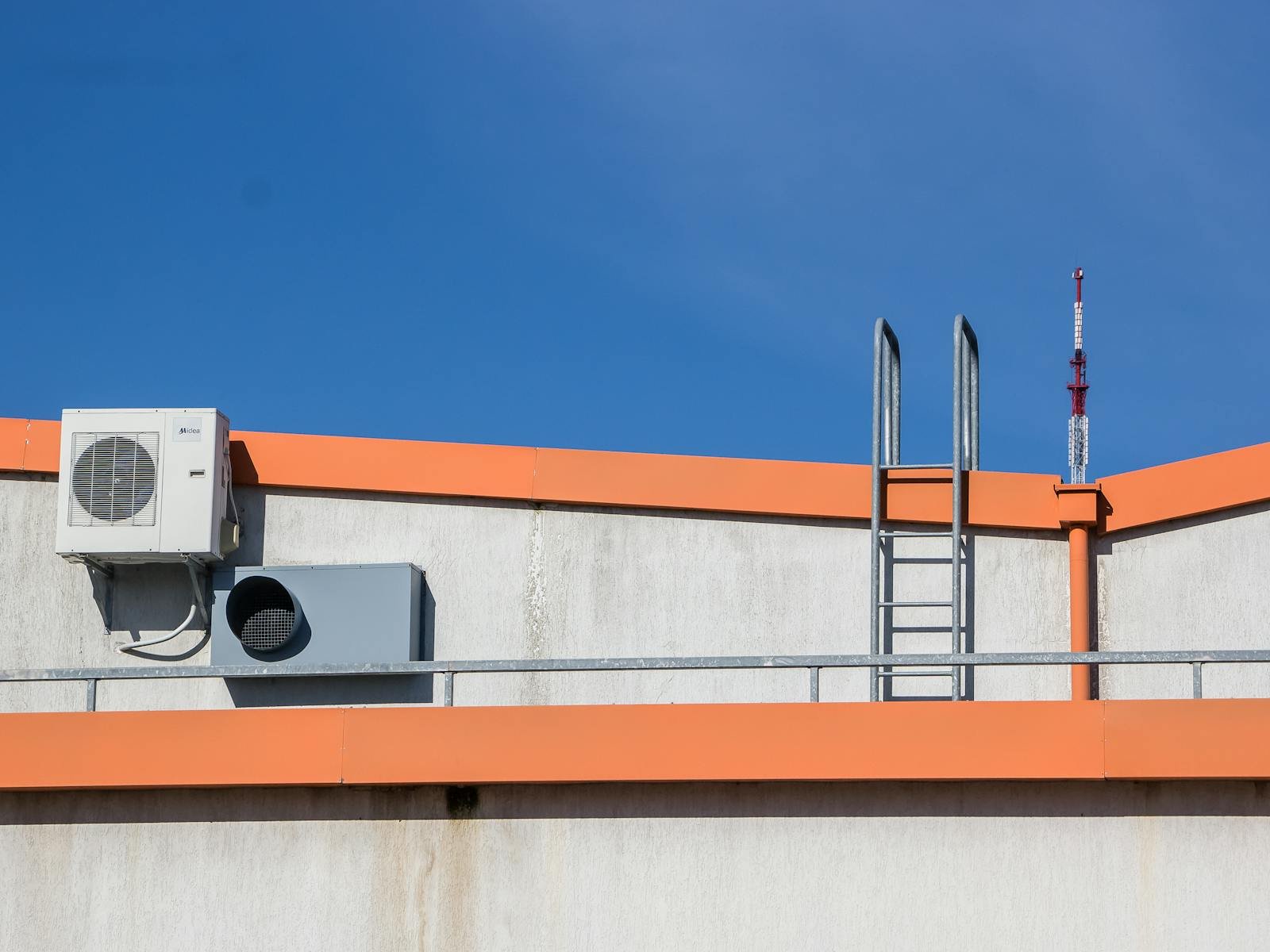
Sacramento's HVAC environment is harder than most of California
Sacramento's climate creates a more demanding operating environment for commercial HVAC than the Bay Area or San Diego. Summer design temperatures of 105°F, wildfire smoke season running June through November, and Central Valley agricultural dust combine to degrade rooftop units faster than in coastal California markets. A maintenance contract written for a Los Angeles office park will not adequately protect a Sacramento industrial property - the filter change intervals, condenser coil cleaning frequency, and CARB combustion analysis requirements are all different.
The consequence of under-maintained Sacramento commercial HVAC is predictable: compressor failure in July. In Sacramento's peak demand season, emergency HVAC service calls run $300–$500 for the first hour and competitive commercial HVAC technicians book 5–10 days out. A $400/year PM contract that prevents one $6,000 emergency compressor replacement pays for itself fifteen times over.
What to verify before signing a Sacramento commercial HVAC maintenance contract
1. CSLB C-20 license - verify, don't assume
Every commercial HVAC contractor in California must hold an active CSLB C-20 license. Verify at cslb.ca.gov using the contractor's license number. Check that the license is active (not expired, suspended, or in probationary status), that the qualifying individual is still associated with the company, and that the current bond and insurance are on file. For duct work and custom fabrication scope, also confirm C-43 (Sheet Metal) certification. A contractor without C-43 performing ductwork modifications is doing so unlicensed.
2. EPA Section 608 certification for refrigerant handling
Technicians who handle refrigerants on commercial HVAC equipment must hold EPA Section 608 Type II or Universal certification. California's new HFO refrigerant transition (R-454B and R-32 replacing R-410A) adds an additional competency requirement - verify that the contractor's technicians have received training on the new A2L (mildly flammable) refrigerant handling requirements. A technician unfamiliar with A2L refrigerant safety handling requirements should not be servicing R-454B equipment.
3. CARB combustion analysis capability
Sacramento County is in the Sacramento Metropolitan Air Quality Management District (SMAQMD). Commercial gas HVAC equipment above threshold input ratings is subject to NOx emission limits under CARB Title 5 and SMAQMD rules. Your maintenance contractor should be able to perform a combustion analysis (flue gas analysis) as part of the annual heating season PM and provide you with documented results. A contractor who does not own a calibrated combustion analyzer is not equipped to verify compliance for gas equipment in the Sacramento air basin.
4. What the maintenance contract scope actually covers
The most common commercial HVAC maintenance contract failure in Sacramento is a contract that specifies visit frequency without specifying visit scope. A contract that says "quarterly PM visits" without defining what is done on each visit is not a protection - it is a billing framework. A quality commercial HVAC maintenance contract in Sacramento should specify at minimum:
- Filter replacement at each visit (specify MERV rating; Sacramento's wildfire season demands MERV 8+ with monthly inspection between visits June–October)
- Condenser coil cleaning at least once per year before summer (twice for heavy-use buildings)
- Refrigerant charge verification with documented subcooling/superheat readings
- Electrical component inspection: capacitors, contactors, disconnect
- Belt, blower, and motor inspection with amp draw documentation
- Combustion analysis and CARB compliance verification for gas equipment
- PM visit report provided to property manager within 5 business days of each visit
5. Response time SLA - the term most contracts obscure
A maintenance contract that does not specify emergency response time is a contract that does not protect you when a unit fails on a 108°F July afternoon. Ask specifically: what is the guaranteed response time for an emergency service call during peak summer? For a Sacramento commercial property, a 24-hour response guarantee is the minimum acceptable standard. National service companies frequently write contracts that specify "reasonable efforts" - not a time commitment. Local Sacramento contractors who know the market typically commit to 4–8 hour emergency response in the Sacramento metro.
Sacramento-specific maintenance calendar
For Sacramento commercial properties, the correct maintenance schedule follows the California season, not a generic national calendar:
- March–April: Pre-summer PM - condenser coil cleaning, refrigerant check, capacitor and electrical inspection, filter replacement. This is the window before summer demand peaks and emergency call backlogs begin.
- June–October: Monthly filter inspection (wildfire smoke season). Replace on condition, not calendar.
- September–October: Pre-winter PM - heat exchanger inspection and CO test, burner and igniter check, CARB combustion analysis, economizer transition to heating mode, filter replacement.
- December–February: Heating season monitoring. Call immediately if heating fails - replacement parts lead 3–6 weeks in Sacramento's market in January.
For the complete summer PM checklist see our commercial HVAC summer maintenance checklist. For the winter counterpart, see our commercial HVAC winterization checklist for California.
Sierra Mechanical's Sacramento service territory
Sierra Mechanical Corporation is headquartered in Rancho Cordova, 12 miles east of downtown Sacramento. We provide commercial HVAC service agreements - Quarterly, Monthly, and Managed (with 24/7 emergency dispatch) - across the entire Sacramento metro: Sacramento, Rancho Cordova, Elk Grove, Folsom, Roseville, Rocklin, Citrus Heights, Natomas, Davis, West Sacramento, Auburn, and El Dorado Hills. Our service technicians are EPA 608 certified and equipped for CARB combustion analysis on every PM visit.
Property managers managing Sacramento commercial portfolios: call (916) 638-8605 or request a service agreement quote online. Same-day response for emergency calls in the Sacramento metro.
License verification: cslb.ca.gov. SMAQMD combustion equipment rules: SMAQMD Rule 411. CARB Title 5 NOx standards for space heating. Information current as of June 2026.